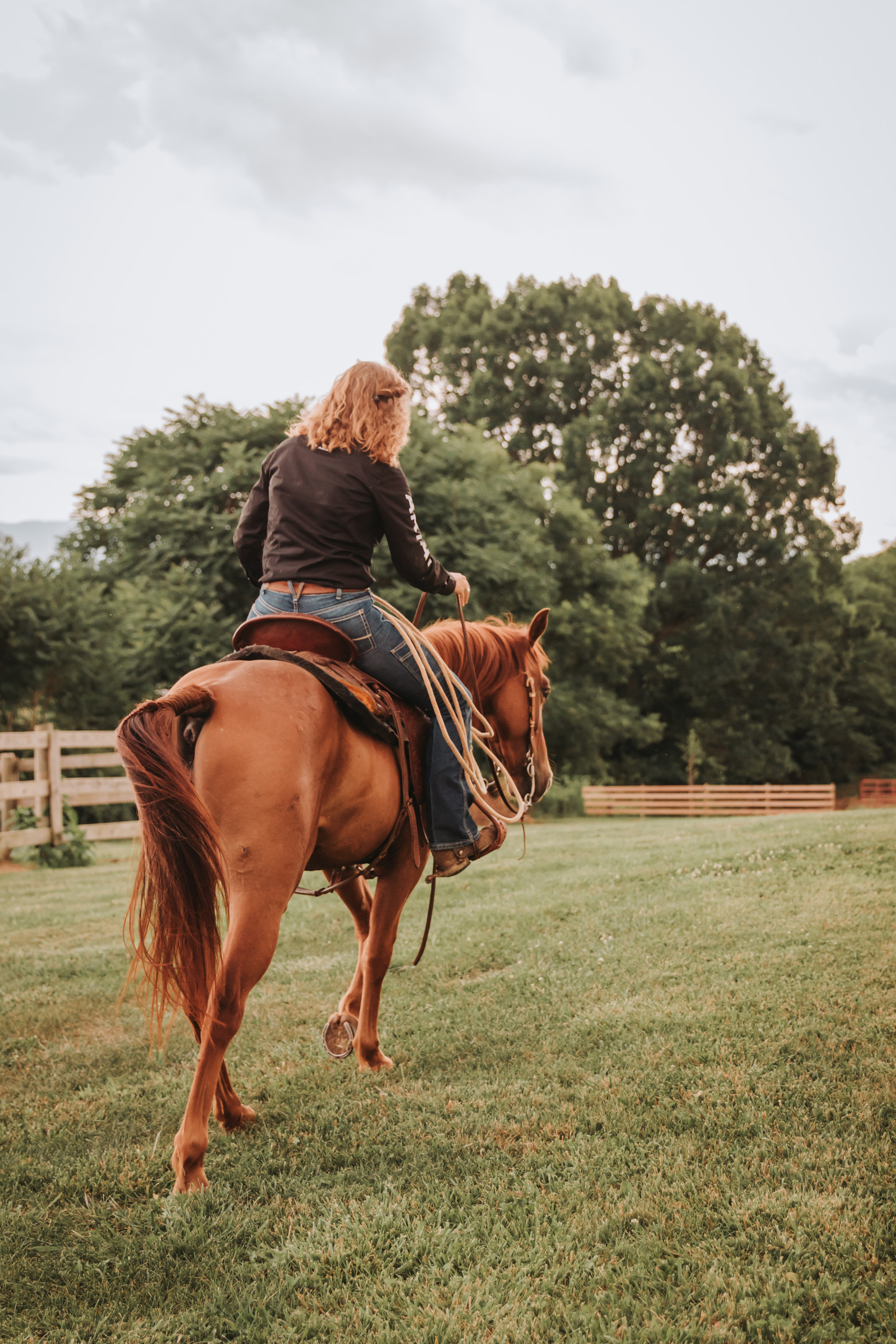
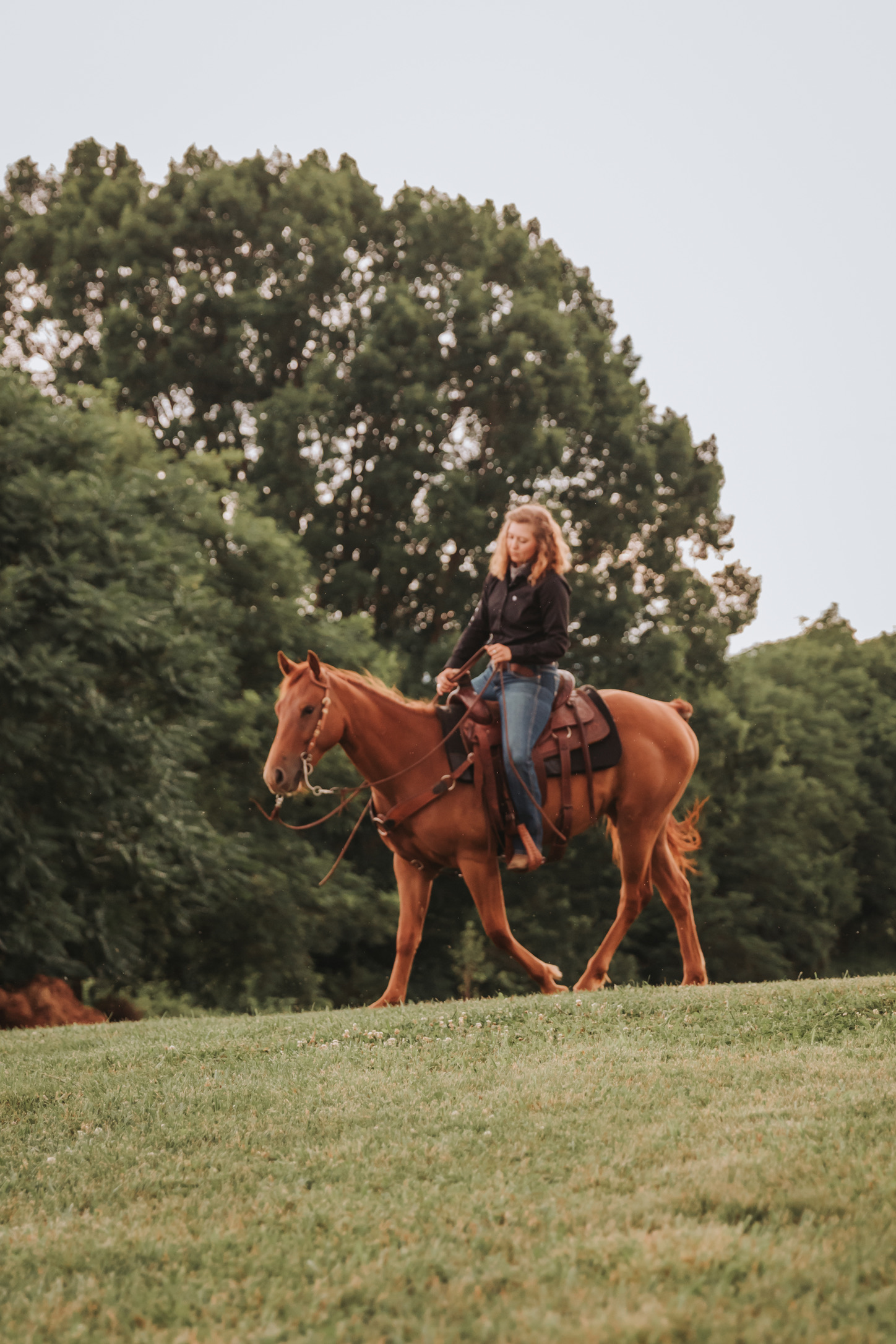
There's no magic to it — no secret, no gadget, no shortcut. Just honest work, good timing, and a trainer who'll tell you the truth about your horse.
I'm Meg. I start the colts, fix the problem horses, and do the work most people are too nice — or too smart — to do themselves.
I won't pretend breeding doesn't matter — a smart, well-bred horse learns faster, and I respect the trainers who say the hard part out loud. But the ones who talk like that mostly built their names on rescues and project horses. So do I. Bring me the one nobody else wants to deal with.
This is my childhood dream and my actual job — which means I'll take the hard ones. The rearers, the bolters, the ones that have already put somebody on the ground. Fair warning: a girl's got to price that in (I don't exactly have health insurance). But if the horse is worth it to you, it's worth it to me.
That dangerous, frustrating stuff is usually exactly why you're calling me. It's fixable — it just takes someone willing to do it.
I'm not mean enough to beat a horse, and I never will be. That's not how you build a willing partner — it's how you build a scared one.
But I'm also not going to let a horse bite, buck, or run me over to keep the peace. There's a difference between firm and harsh, and good timing is what lives in between. Fair, consistent, and honest — every single day.
It all comes back to pressure and release. Ask, wait, and release the instant the horse tries — release at the right half-second and the horse learns; release at the wrong one and you've taught the opposite. That timing is the whole job.
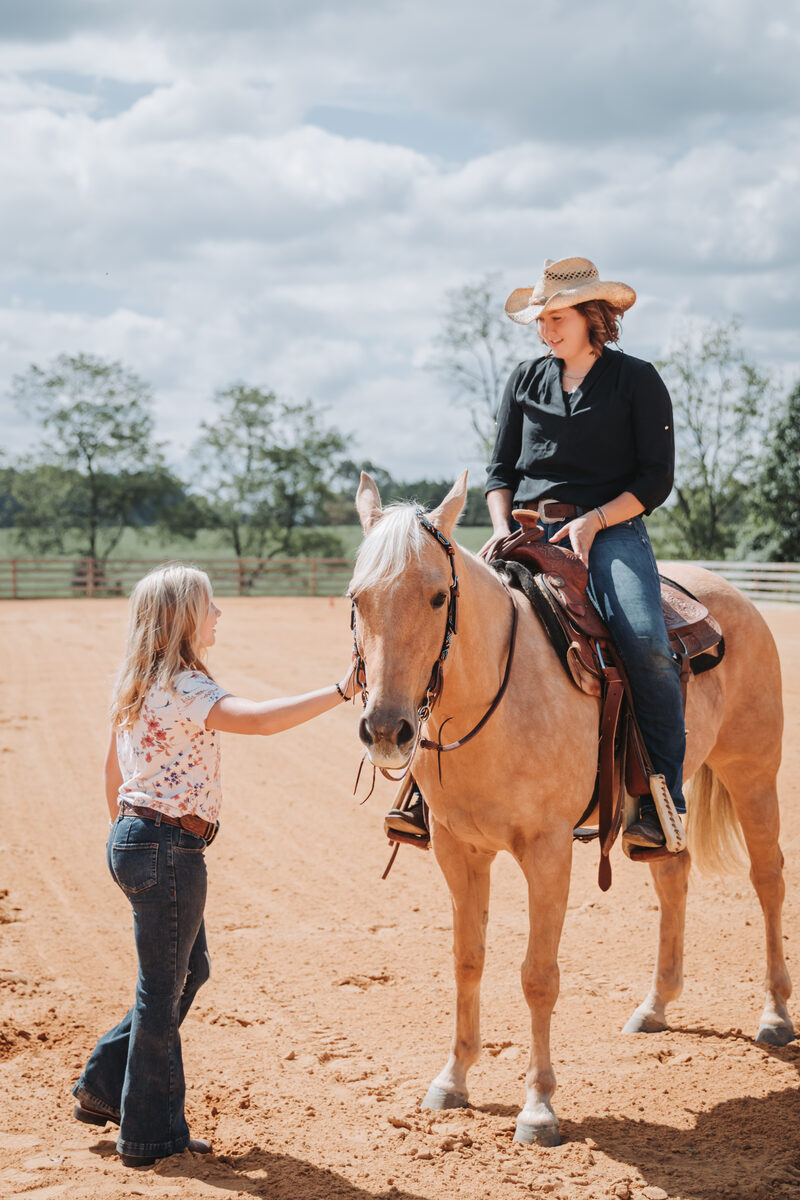
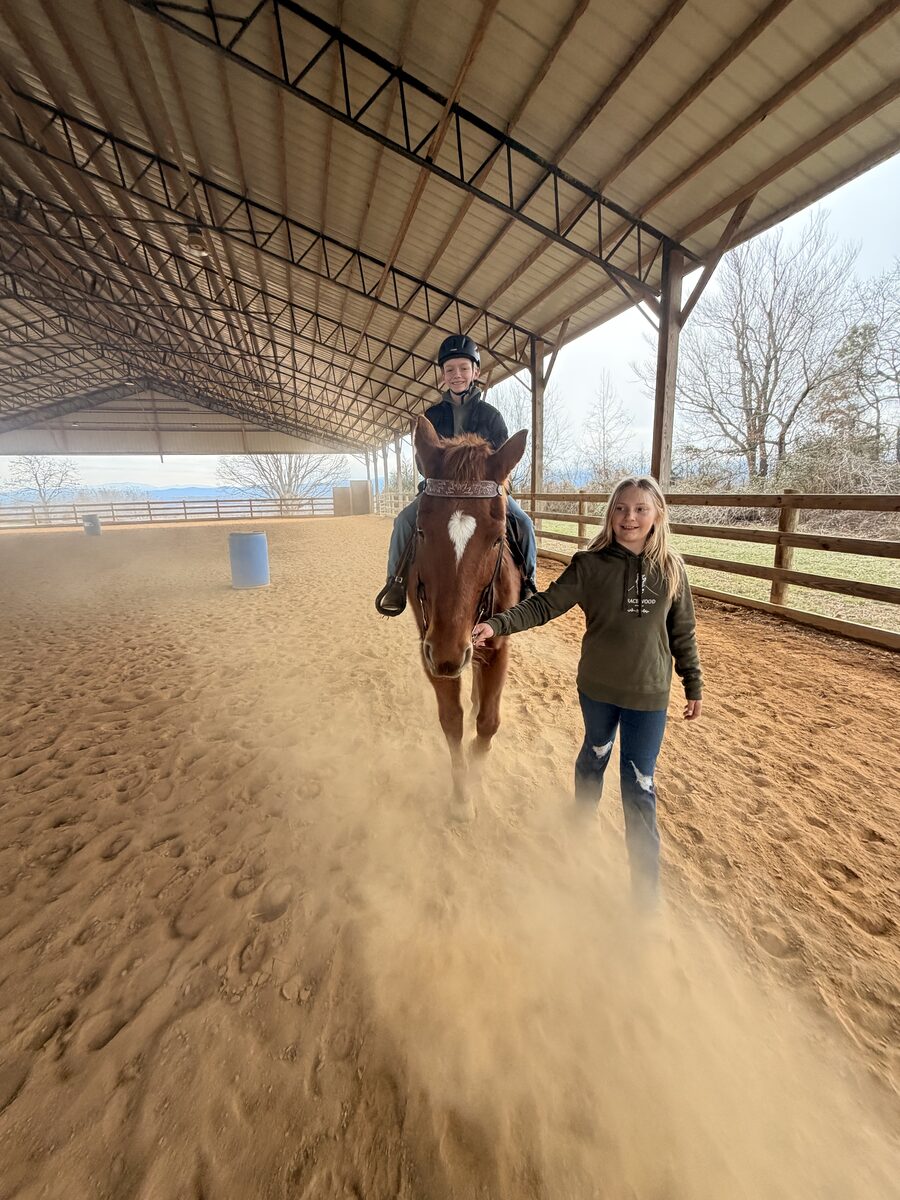
Training horses and teaching people are the same job to me: respect, manners, and showing up. With my riders — kids and adults alike — the first lessons aren't really about riding. They're about how you treat a horse and how you carry yourself around one.
"I can't" isn't allowed in my arena — not once. You can ask for help all day long, and I'll always give it. But you don't get to quit before you've tried. I'll push you to try, and I'll never set you up to fail.
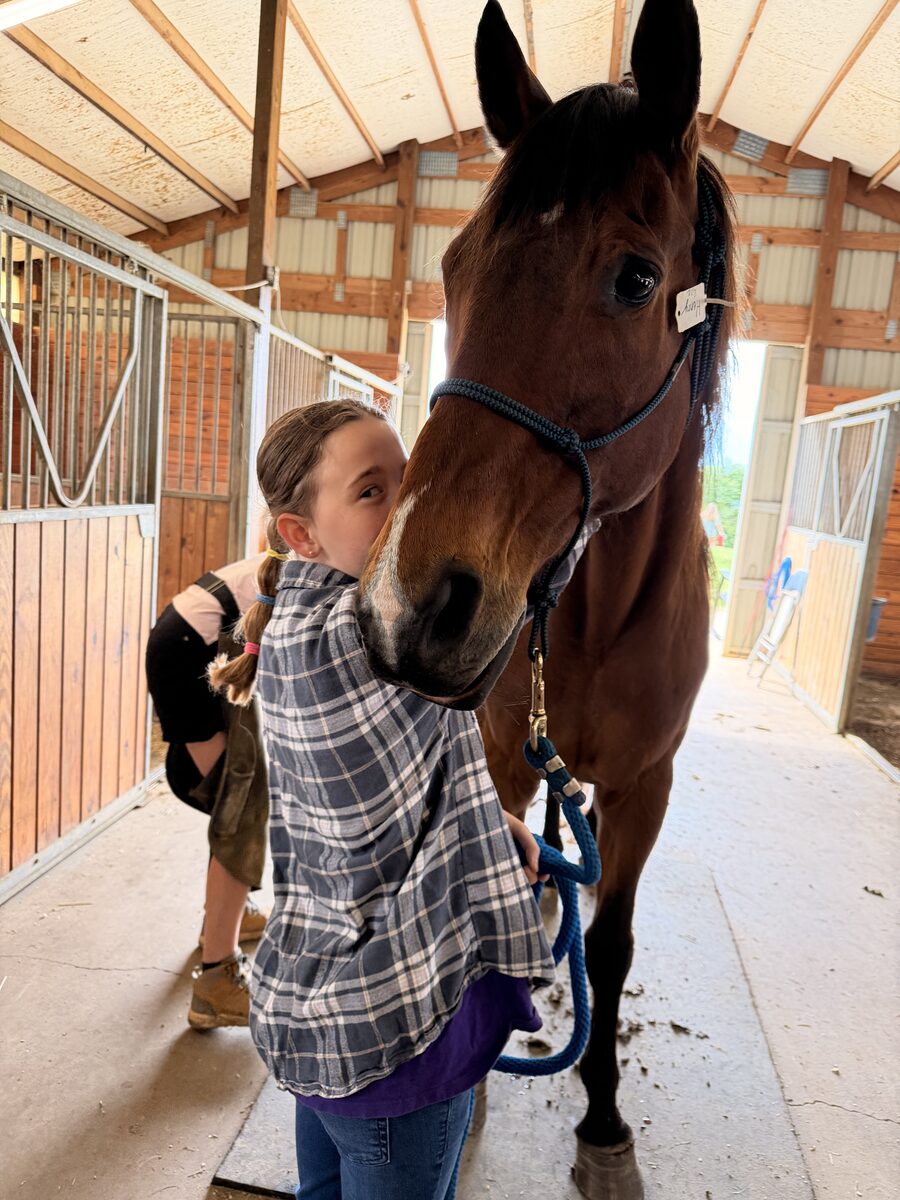
There's something that changes in a kid the first time they groom a horse themselves and muck a stall clean enough to lie down in. That's where the respect comes from — and the confidence. The unglamorous parts are the ones that stick.
There's a time for jokes and a time for structure, and I know the difference. Tough love in the arena, and a tight hug when we finally hit the goal we've been chasing. That's the deal.
I'm in clinics whenever I can be — the day I think I know it all is the day I get somebody hurt. Horsemanship is a lifetime of small corrections, and I'd rather keep learning than pretend I've arrived.
When I get the chance, I head out west to ranch: real cattle work, horses doing an actual job across real country. That's where you find out what a horse — and a rider — is really made of, and I bring every bit of it home to your horse.
Start with a free 20-minute consult — no charge, no pressure. Want a full hands-on evaluation? That's $100. Either way, I'll tell you straight what I see and whether we're the right fit.